
Vertebrates
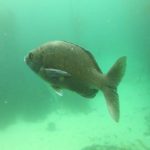


Vertebrates
Vertebrata are among the most structurally complex organisms.
Marine vertebrates, classified under the phylum Chordate and class vertebrata, are among the most structurally complex organisms. The seven main classes in Vertebrata are: Agnatha, Chondrichthyes (“Chondree-ICK-thees”), Osteichtheyes (“Ostee-ICK-thees”), Amphibian, Reptilian, Aves, and Mammalia.
The first three classes in Vertebrata are all a form of fish. In class Agnatha are the 75 species of jawless fish or Hagfish and Lampreys. Class Chondrichthyes contains 800 species of rays and sharks. Class Osteichthyes classifies bony fish. Reptilian (reptiles), Aves (birds), and Mammalia (mammals) are also common in both terrestrial and marine environments. There are approximately 27,000 species of fishes, 2200 species of amphibians, 6000 reptiles, 9000 birds, and 4400 mammals in the class Vertebrata.
Vertebrates Vertebrata are among the most structurally complex organisms. Marine vertebrates, classified under the phylum Chordate and class vertebrata, are among the most structurally complex…
Read More
Animals that lack backbones are known as invertebrates. Over 98% of species on earth are invertebrates that rely on other strategies for support such as…
Read More
The plant kingdom is made up of multi-cellular, photosynthetic Eukaryotas. These multi-cellular organisms contain specialized cells that perform different tasks. Algae are some of the…
Read More